

Screen protector bubbles are not all removable, and effort is not what determines success. What matters is the condition of the adhesive bond at the moment the bubble forms. Some bubbles exist because contact never finished forming. Others exist because contact formed and later failed. Only the first case allows correction.
This guide explains how to recognize the difference, which actions actually improve the outcome, and how to avoid damaging a protector that could have settled correctly or misjudging one that never will.
Basic Tool Kit
- Flat plastic card (credit card or similar)
- Clean microfiber cloth
- Transparent adhesive tape (Scotch-type)
- Dust-free workspace with good lighting
What a Bubble Tells You
A screen protector stays in place through adhesive contact across the glass surface. That contact forms during installation and stabilizes shortly afterward.
A bubble indicates one of two states. Either adhesive contact did not finish forming during installation, or contact formed and later broke due to stress.
These two states behave differently and require different responses. The distinction matters because techniques that work during installation do not apply once contact has failed.
Bubbles That Can Be Corrected During Installation
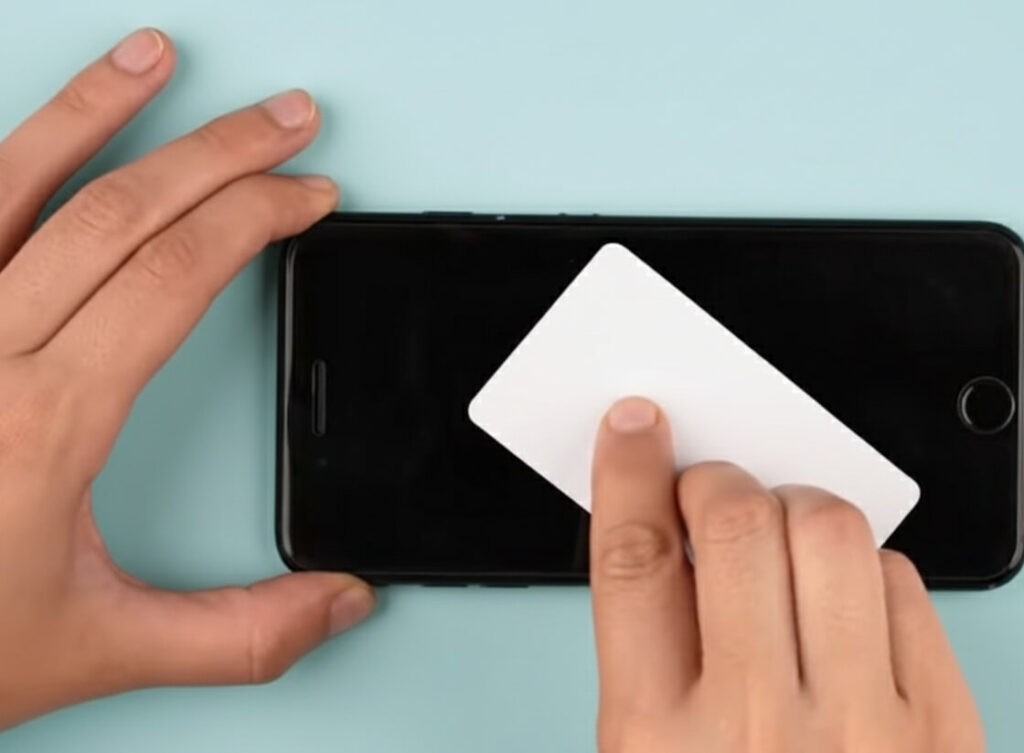
Bubbles that appear during installation or within the first few minutes are caused by incomplete adhesive contact.
The effective approach is controlled, directional pressure that guides contact to completion. Remove the phone case. Use a flat card or straight edge wrapped in a clean microfiber cloth. Bare plastic can drag across the surface and leave marks. Place the card just behind the bubble and move in a single straight line toward the nearest edge. Pressure should be slow and even, without changing direction.
When adhesive contact completes correctly, the bubble collapses and does not return. If the bubble stretches, fractures into smaller pockets, or reappears immediately, the adhesive layer has already been disturbed and further pressure will not improve the result.
Bubbles Caused by Contamination
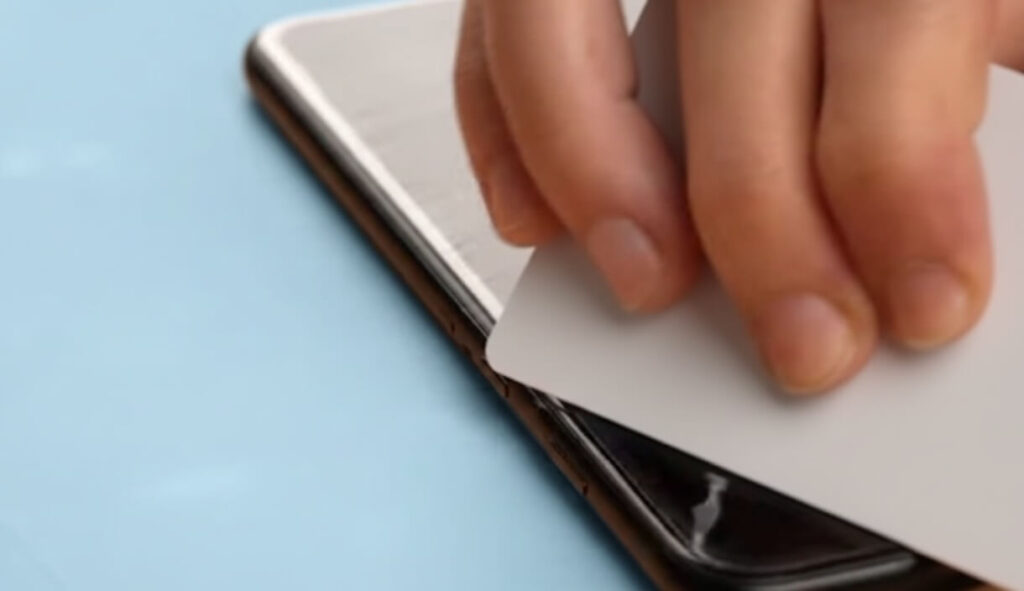
Some bubbles remain fixed in place and often have a visible dot at the center. These are caused by dust, lint, or debris trapped between the screen and the adhesive surface.
These bubbles cannot be pushed out. Pressure stretches the adhesive around the particle and creates a visible halo. Correction requires lifting the protector slightly near the affected area. Adhesive tape should be used to lift the debris from both the screen surface and the adhesive side. Fingers should not touch the adhesive, as skin oils introduce new contamination.
After debris removal, the protector should be allowed to settle back naturally without force. If the area appears cloudy, creased, or uneven, the adhesive structure has been compromised and stability is unlikely.
Bubbles That Appear Later or Return After Pressure
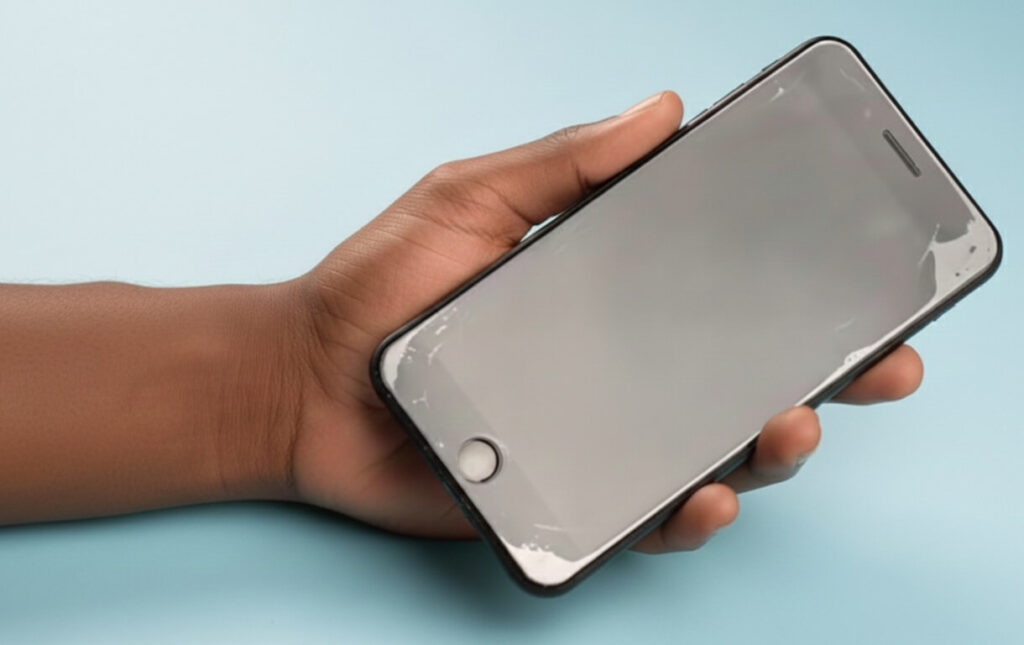
If a bubble appears hours or days after installation, or returns after being flattened once, the cause is not trapped air. In these cases, adhesive contact formed correctly and later failed.
This failure is commonly triggered by real-world stress. Pressure from a phone case, pocket movement during the stabilization period, or tension near the edges of the screen can break contact after installation. Once this happens, bubbles tend to return in the same location or spread along the same area.
Edge bubbles belong to this category. The perimeter of most screens offers less adhesive support due to curvature or tapering, making these areas more sensitive to stress.
Protector Construction Matters
Not all screen protectors respond the same way to stress.
Tempered glass protectors use pressure-sensitive adhesive that stabilizes quickly. Once disturbed, it does not self-heal. Bubbles in glass protectors are typically static and must be corrected immediately or accepted as permanent.
Film protectors, often made from TPU or similar materials, use more flexible adhesive. Small bubbles or haze patterns in film can dissipate over time because the material is gas-permeable and absorbs minor stress. This behavior does not apply to tempered glass.
Edge-adhesive glass protectors rely on bonding around the perimeter rather than across the full surface. These designs are more prone to edge lift and halo effects, particularly on curved screens. Full-adhesive glass provides more stable contact but still depends on screen geometry.
Heat, Oil, and UV Glue Methods in Context
Heat and oil methods are often suggested online because they temporarily change surface appearance. Gentle heat can soften adhesive. Oil can fill gaps and visually mask edge lift. Neither approach restores broken adhesive contact.
UV glue protectors are a separate category. These rely on liquid adhesive that must spread evenly before curing. Bubbles in UV glue installations require different handling and carry higher risk if done improperly. Treating them like standard air bubbles often leads to permanent defects or device damage.
Buying Smarter Next Time
Better outcomes start with matching the protector to the device and usage. Curved screens benefit from designs that allow edge clearance. Film protectors tolerate minor stress better than glass in some cases. Phone cases should be chosen with protector compatibility in mind, especially where case lips sit close to the screen edge.
If replacement becomes necessary, choosing a screen protector designed around proper fit and edge clearance can prevent the same issues from returning.
Conclusion
Removing bubbles from a screen protector depends on identifying whether adhesive contact is still forming or has already failed. When correction is possible, controlled action works. When it is not, further effort only degrades the result.
Understanding that boundary turns frustration into informed control.
Frequently Asked Questions (FAQ)
Yes, but only in film-style protectors. Hydrogel and TPU films can vent micro-bubbles because the material and adhesive remain flexible for a while after installation. Most visible improvement happens in the first 24 hours, and the final result usually settles within 48 to 72 hours. Tempered glass does not behave this way. If a glass bubble is still visible after the first install window, time does not solve it.
That is adhesive scarring. The bubble’s shape changed, but the adhesive layer underneath was stretched or creased, so light now refracts unevenly through that area. This is why it looks like fog or a dull patch under certain angles. Once scarring appears, it does not clear fully because the adhesive has been mechanically damaged rather than temporarily displaced.
The white halo is edge contact loss, not trapped air that can be swept out. It happens where the screen transitions into a taper or curve and the protector cannot maintain uniform contact at the perimeter. Pressure can reduce the look briefly, but it does not change the geometry that caused the gap. A durable fix is usually choosing a case-friendly protector with more edge clearance, switching to a film protector on curved screens, or changing the case if the lip is interfering.
In most cases, no. Water and cleaning agents leave residue that blocks clean adhesive contact, and drying exposes the adhesive to airborne dust and fibers. Even if it looks clean, adhesion strength is usually reduced and the protector becomes more likely to haze, lift, or develop repeat bubbles. The practical exception is some wet-install films that are designed to be re-squeegeed during installation, but tempered glass protectors are not meant to be washed and reused.