

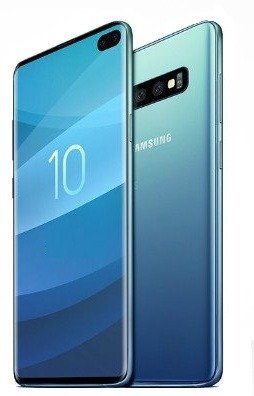
The Galaxy S10 is no longer a current flagship, yet it marks one of the most refined turning points in Samsung’s history. When it appeared in early 2019, it redefined the company’s design language with the Infinity O display, the first ultrasonic fingerprint sensor embedded beneath glass and a triple-camera system that became a standard for every phone that followed. Six years later, it stands as the device that bridged the tactile past with the seamless hardware now seen across One UI 8 and the Galaxy S24 and S25 lines.
Specification Summary
| Category | Details |
|---|---|
| Announcement | February 20, 2019, San Francisco (Galaxy Unpacked) |
| Release | March 8, 2019 (global), April 5, 2019 (S10 5G South Korea) |
| Launch Prices (USD) | S10 $899 |
| Chipsets | Snapdragon 855 (US, 7 nm) / Exynos 9820 (global, 8 nm) |
| Display | 6.1″ Dynamic AMOLED QHD+ 550 ppi HDR10+ Infinity O |
| Main Camera | 12 MP wide + 12 MP tele + 16 MP ultrawide |
| Battery | 3400 mAh (15 W wired / 12 W wireless / 4.5 W reverse) |
| OS Lifecycle | Android 9 → 12 |
Release Timeline
Samsung announced the Galaxy S10 series on February 20, 2019 at its Unpacked event in San Francisco, days before Mobile World Congress. Pre-orders opened that same evening, and the phones reached shelves worldwide on March 8. The Galaxy S10 5G launched separately on April 5, 2019 in South Korea before expanding to Verizon US in May.
Production concluded in March 2020, closing a generation that ran from the S8 through S10 before the Note and S20 lines took over. Software support continued for three major Android iterations, ending in 2023 with Android 12 / One UI 4.1, the last security patch arriving that same year. Today, the S10 remains functional on current networks with full LTE capability and partial 5G coverage through its dedicated variant.
Pricing History
At launch, Samsung positioned the S10 line at the upper end of the premium market. The compact S10e opened at 749 USD, the base S10 at 899, the S10 Plus at 999, and the 5G model at 1,299. Each step added display size, battery capacity, and camera hardware while sharing the same internal architecture.
By late 2019, global discounting began as the S20 was teased, pushing retail values down roughly 20 percent within eight months, a shift that marked Samsung’s adoption of faster product cycles.
In 2025, original units still circulate on the refurbished market for around 120 USD (S10) to 190 USD (S10 Plus), depending on storage and cosmetic condition. These prices remain stable because collectors value the last flagship.
Hardware and Performance Core
The S10 introduced Samsung’s first implementation of the 8-nanometer Exynos 9820 and Qualcomm’s 7-nanometer Snapdragon 855, offering up to 30 percent improved CPU efficiency and nearly 40 percent better GPU output compared with the S9.
The Exynos version featured custom Mongoose cores and a Mali-G76 MP12 GPU, while the Snapdragon paired Kryo 485 cores with Adreno 640. Benchmarks aside, real-world use favored the Snapdragon for battery endurance and thermal stability, particularly in gaming loads, where the right gaming accessories can make sessions smoother.
Storage was UFS 2.1 — fast for its time — ranging from 128 GB to 1 TB on the ceramic S10 Plus. Memory topped at 12 GB LPDDR4X RAM. Thermal management relied on a vapor-chamber system inside the larger models, keeping sustained performance reliable even under 3D workloads. For everyday users, this translated into consistently smooth multitasking, stable frame rates, and longer sustained camera recording sessions before thermal throttling.
Display Design
Samsung’s Dynamic AMOLED panel on the S10 set a new display standard. It introduced HDR10+ certification, peak brightness over 1,200 nits, and true tone mapping that adjusted to ambient light in real time. The 6.1-inch Infinity O screen reduced bezels to under 2 millimeters, embedding the selfie camera through a laser-cut circular opening — a visual statement that defined Samsung’s design language through the S22.
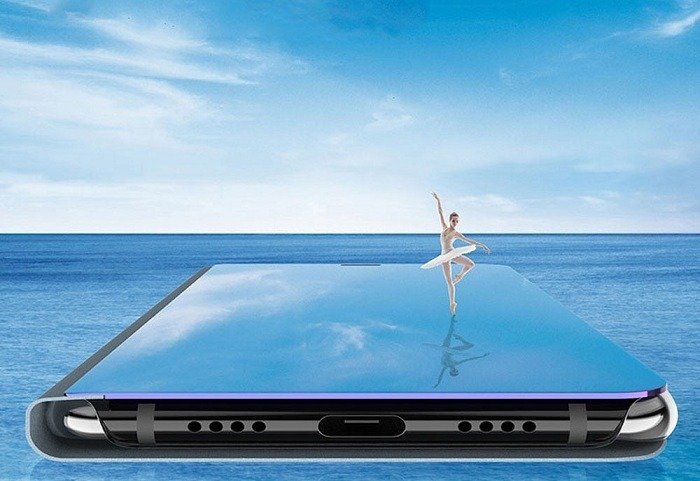
Build quality combined Gorilla Glass 6 front and back with an aluminum frame, sealed to IP68 resistance. At 157 grams, the base S10 achieved balance between the heavier glass slabs that followed and the lighter S9.
Unlike current flagships, it retained a 3.5 millimeter headphone jack and a hybrid microSD slot. The absence of unnecessary texture or sharp edges gave it a clean ergonomic identity still referenced in Samsung’s industrial design manuals today.
Camera System
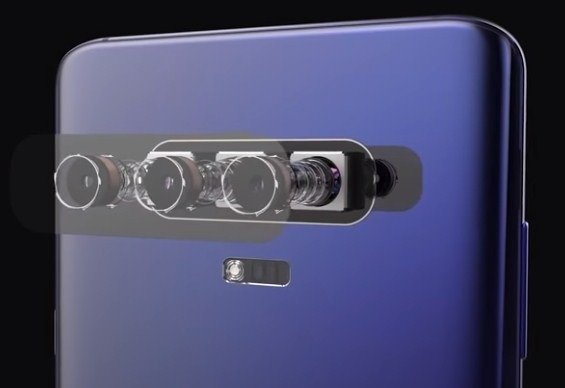
Samsung replaced the S9’s dual setup with a versatile triple-camera array: a 12 megapixel wide sensor with dual aperture f 1.5 to 2.4 and optical stabilization, a 12 megapixel telephoto lens with 2× optical zoom and stabilization, and a 16 megapixel ultrawide lens with a 123 degree field of view. Image fusion software combined frames for contrast and dynamic range before the final pipeline processed HDR10+ metadata directly into video files — the first Android device to do so.
The front camera used a 10 megapixel Dual Pixel sensor capable of 4K 30 fps video, a first for selfie cameras at the time. In practice, the system delivered sharp daylight photos and competitive low-light results against the Pixel 3 and iPhone XS, with stronger color accuracy and better skin tone balance.
The S10 Plus added an 8 megapixel depth camera for portrait segmentation, and the S10 5G included a Time-of-Flight sensor for AR mapping and background blur in video mode. In 2025, this system still functions reliably and retains support for Google Camera ports that extend its life in custom ROM communities.
Battery Performance
The S10 series balanced efficiency with capacity rather than brute size. The base model used a 3,400 milliamp-hour cell, the Plus 4 100, and the 5G variant 4 500. Each supported 15 watt USB Power Delivery charging and up to 12 watt Qi wireless. Reverse charging, called Wireless PowerShare, delivered 4.5 watts for topping up Galaxy Buds or watches — a novelty in 2019 that proved more functional than gimmick.
In daily use, battery life averaged six to seven hours of active screen time on the Snapdragon model and about one hour less on the Exynos due to voltage inefficiency. Fast-charge standards have evolved since, but the S10’s moderate rates helped maintain longevity; many original cells still hold over eighty percent capacity after six years.
Connectivity & Software
The S10 was the first mainstream phone to ship with Wi-Fi 6 hardware, supporting higher bandwidth and better latency in crowded networks. It included Bluetooth 5.0, NFC, and full GPS / GLONASS / Galileo positioning. All non-5G models relied on LTE Cat.20 modems with up to 2 Gbps theoretical speeds.
Software progressed from Android 9 Pie to Android 12 with One UI 4.1. Samsung kept quarterly security patches until mid-2023, after which the series moved to “legacy support” status. Even today, the S10 runs stable community firmware based on Android 13 for those using custom ROMs, illustrating the hardware’s continued headroom and Samsung’s successful driver documentation for independent developers.
Pre-Launch Leaks vs Reality
Late 2018 was saturated with renders and benchmarks leaking every corner of the S10 family. Reports of a punch-hole display and ultrasonic fingerprint reader proved accurate. So did predictions of multiple sizes and a flat display variant that became the S10e. Price leaks from retail partners matched the official tags exactly.

Rumors that the entire line would carry quad cameras and 1 TB storage were incorrect — only the S10 Plus offered that capacity through its ceramic edition. Speculation of a front laser scanner and foldable secondary display never materialized. By the time Samsung took the stage, the only surprise was how closely the final product matched months of leaks, an early sign of how transparent supply chains had become in the mobile industry.
Legacy and Current Relevance
In 2025, the Galaxy S10 occupies a distinct space between modern flagships and retro hardware. It remains the last Galaxy to pair premium construction with both a headphone jack and microSD expansion. It introduced Wi-Fi 6 and reverse wireless charging long before they became industry standards. Its design still feels cohesive and proportioned in an era of oversized slabs.
Used units continue to serve as reliable secondary phones and content recorders, especially among creators who appreciate manual video controls and optical stabilization. From a technical lens, the S10 was Samsung’s pivot from incremental updates to architectural advancement — an engineered statement that closed a decade of experimentation and prepared the ground for the era of foldables and AI-integrated cameras. It remains proof that innovation can age gracefully when function and form stay aligned.
This article was originally published in 2019 and updated on November 12, 2025 to reflect the Galaxy S10’s current relevance, pricing, and overall hardware condition.