

Phones look stronger than ever, with titanium frames and harder glass branding that suggest durability is built in. Those improvements are real, but they solve a different problem than most people assume. Stronger frames resist bending, while harder glass resists scratching. Neither replaces energy absorption.
Modern smartphones are engineered to retain shape, manage signal flow, dissipate heat, and support complex camera systems. They are precision devices optimized for performance, not structures designed to absorb repeated impact on their own.
How Modern Phone Construction Changes Impact Behavior
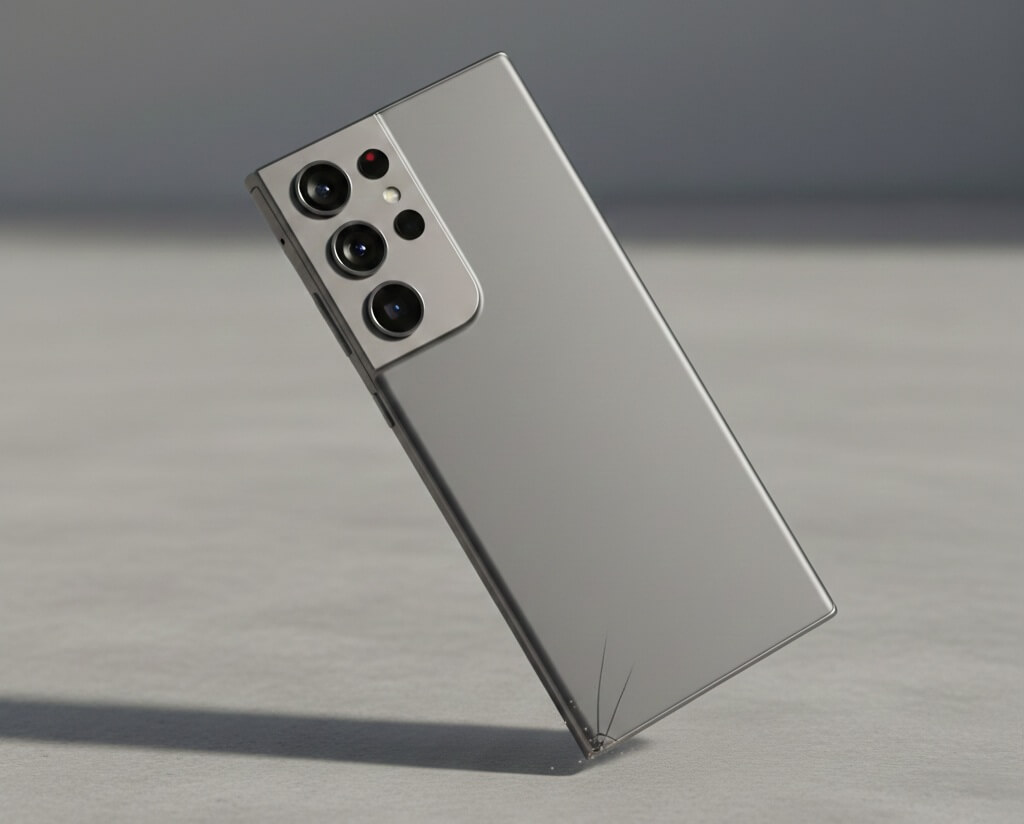
Most drops do not happen flat. Real-world repair data and controlled drop testing consistently show that edge and corner impacts are the most common failure pattern. Phones typically strike on a rim, a camera ring, or a frame edge, where force concentrates into a small contact point.
Modern devices are also heavier than their equivalents a few years ago. When that mass stops suddenly against a rigid surface, the internal load transferred through the structure increases. At the same time, frames have become more rigid and assemblies more tightly bonded, preserving external shape rather than dissipating shock.
Earlier mobile phones, particularly early-2000s Nokia models, used modular construction with removable backs and batteries. When dropped, the housing often separated into components, dispersing kinetic energy through structural release rather than forcing it through a sealed internal assembly.
The shift from modular release to bonded rigidity changes the failure pattern. Instead of visible dents absorbing part of the impact, more stress travels through bonded layers into internal components that depend on precise alignment.
Camera systems illustrate this clearly. Optical image stabilization (OIS) suspends lens elements on tiny springs and magnetic assemblies. A torsional impact can disturb that alignment without cracking the surrounding glass. Focus inconsistency or stabilization drift often appears later, long after the drop itself, because calibration shifted while the exterior remained intact.
Bonded construction compounds the issue. Displays, rear panels, and structural seams rely heavily on adhesive systems for rigidity and sealing. Water resistance depends on those seals remaining intact. Repeated shock events can fatigue bonded layers over time, which is why water resistance is not permanent durability but a sealing system under stress.
What a Case Actually Changes
A case alters three variables: probability, geometry, and energy transfer.
Probability. Glass and coated metal are naturally low-friction surfaces. Texture and compliant materials improve grip against skin and fabric, lowering the chance of a slip before a drop occurs.
Geometry. Raised edges around the display and camera assembly change the first point of contact. On devices with pronounced camera stacks, lens clearance determines whether glass or polymer meets the surface first. That sequence controls how stress moves through the structure.
Energy transfer. Compressible materials deform under sudden load, spreading impact across a wider area and lowering peak stress entering the frame. Hybrid constructions combine compliant layers that dampen shock with firmer shells that maintain structural alignment. Bulk alone does not define protection; response under load does.
A case does not eliminate failure. It changes how force enters the device.
Why Fit Precision Directly Affects Protection
Material quality loses effectiveness if the fit is loose. A case must conform precisely to the exact device model, since closely related variants such as the iPhone 16 Pro Max and iPhone 17 Pro Max differ in dimensions and tolerances.
Even slight looseness allows the phone to shift inside the shell during impact. That movement concentrates stress along contact edges and reduces the protective layer’s effectiveness.
Tight tolerance fit ensures the device and case function as a single structure at the moment of impact.
How Cases Affect Heat and Signal Performance
Modern smartphones use their frame as part of their thermal dissipation path. During sustained tasks such as navigation, gaming, video calls, or heavy data use, internal heat rises. Advanced cooling systems such as vapor chambers and graphite spreaders rely on the frame to shed load efficiently, which means adding insulation around that frame alters how heat escapes under sustained load.
Poorly designed cases can trap heat, increasing thermal throttling and accelerating battery wear, and charging introduces another layer of thermal sensitivity. Wireless systems depend on controlled spacing between coils and alignment magnets, so excessive thickness or metallic coatings can reduce efficiency or increase charging heat.
Signal performance also matters. Antenna arrays are located along defined frame zones. Cases using dense materials, metallic paints, or decorative carbon-style layers can interfere with signal transmission. When signal quality drops, the modem increases output power to maintain connection, increasing battery consumption.
A well-designed case protects without compromising thermal dissipation or antenna transparency.
Screen Protectors Are Not the Same Thing
Phone cases and screen protectors address different failure modes.
A case mitigates structural stress and impact geometry. A screen protector primarily defends against surface scratches and shallow glass damage. It can help with minor face-down drops but does not absorb torsion or frame-level stress.
Used together, they address surface wear and structural shock separately.
Some Phone Damage Is Disproportionately Expensive
Not all failures cost the same to repair. A cracked back glass panel is often a mid-range service, but camera module damage or display separation is more complex because those parts are built as integrated precision assemblies and typically replaced as a unit.
On many current-generation flagship smartphones, including iPhone Pro models, Samsung Galaxy S and Ultra variants, and Google Pixel Pro devices, rear glass repairs commonly range between $150 and $250, while camera-related repairs can exceed $300, with pricing varying by country and whether the repair is performed through an authorized service provider or independent technician.
National repair data reflects how widespread these costs have become. Allstate Protection Plans reported that Americans spent $8.3 billion on screen repairs in 2023 alone, with average repair and replacement costs around $302 per incident. The issue is not that every drop becomes catastrophic, but that damage events are common and certain failure categories carry significantly higher repair thresholds.
Insurance covers the consequence after failure. A case reduces the probability of triggering the higher-cost category of damage in the first place.
Maintenance and Case Lifespan
Protection is not permanent.
Polymers such as TPU (Thermoplastic Polyurethane) and silicone gradually lose elastic recovery after repeated compression cycles. Over time, an older case may absorb less shock than it did when new. Yellowing is cosmetic, but loss of elasticity is functional, which is why replacing a heavily worn case periodically helps maintain performance.
Cases also trap debris. Fine grit enters during daily use and can abrade finishes through micro-movement. Microscopic quartz particles commonly found in dust measure 7 on the Mohs hardness scale. Most strengthened smartphone glass typically shows visible scratching at level 6.
That hardness difference explains why trapped grit can mark surfaces even when the glass is marketed as highly durable.
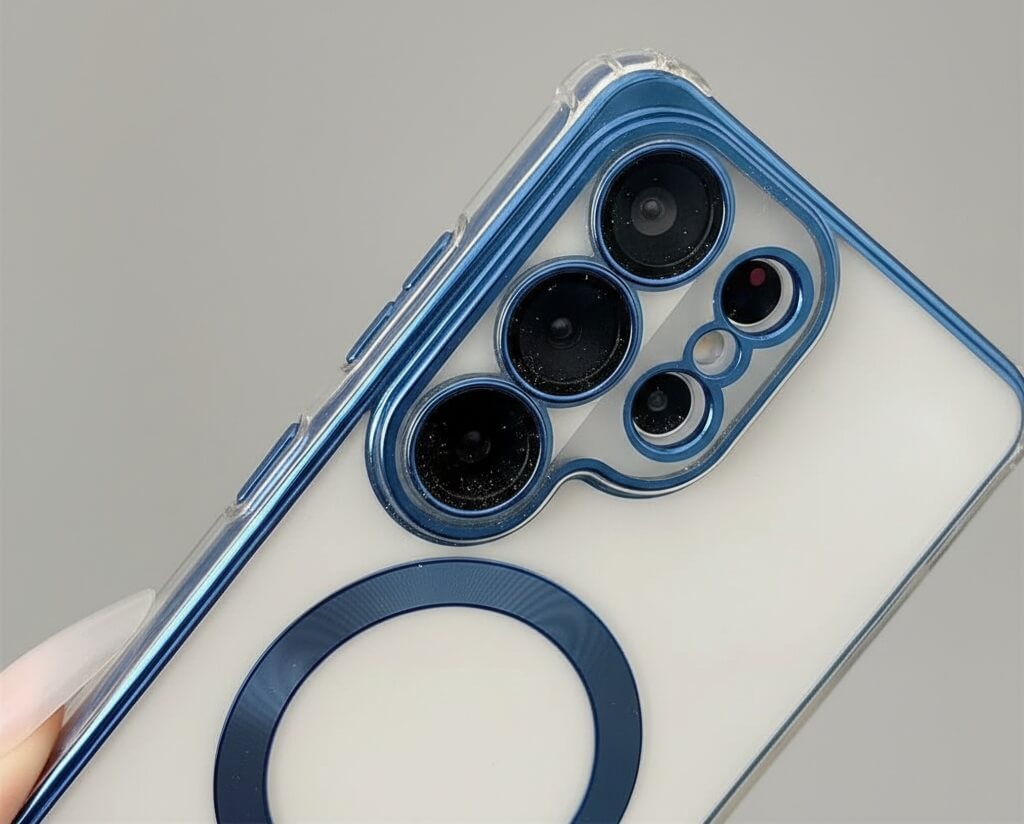
Removing the case periodically, wiping the interior and device edges clean, and reseating it only when contact surfaces are clear preserves both the device finish and the case’s protective performance.
What This Means When Choosing a Case
Selection logic is practical rather than aesthetic.
Look for measurable clearance above the camera assembly and display edge, confirm exact model fit, and prefer designs that combine compliant shock-absorbing layers with structural reinforcement. Avoid unnecessary metallic coatings that could interfere with wireless performance, and if wireless charging or magnetic attachment matters, verify compatibility rather than assuming it.
For foldable devices, ensure the case is engineered for hinge tolerances rather than simply wrapped around the frame, since improper fit can introduce friction or debris near moving assemblies.
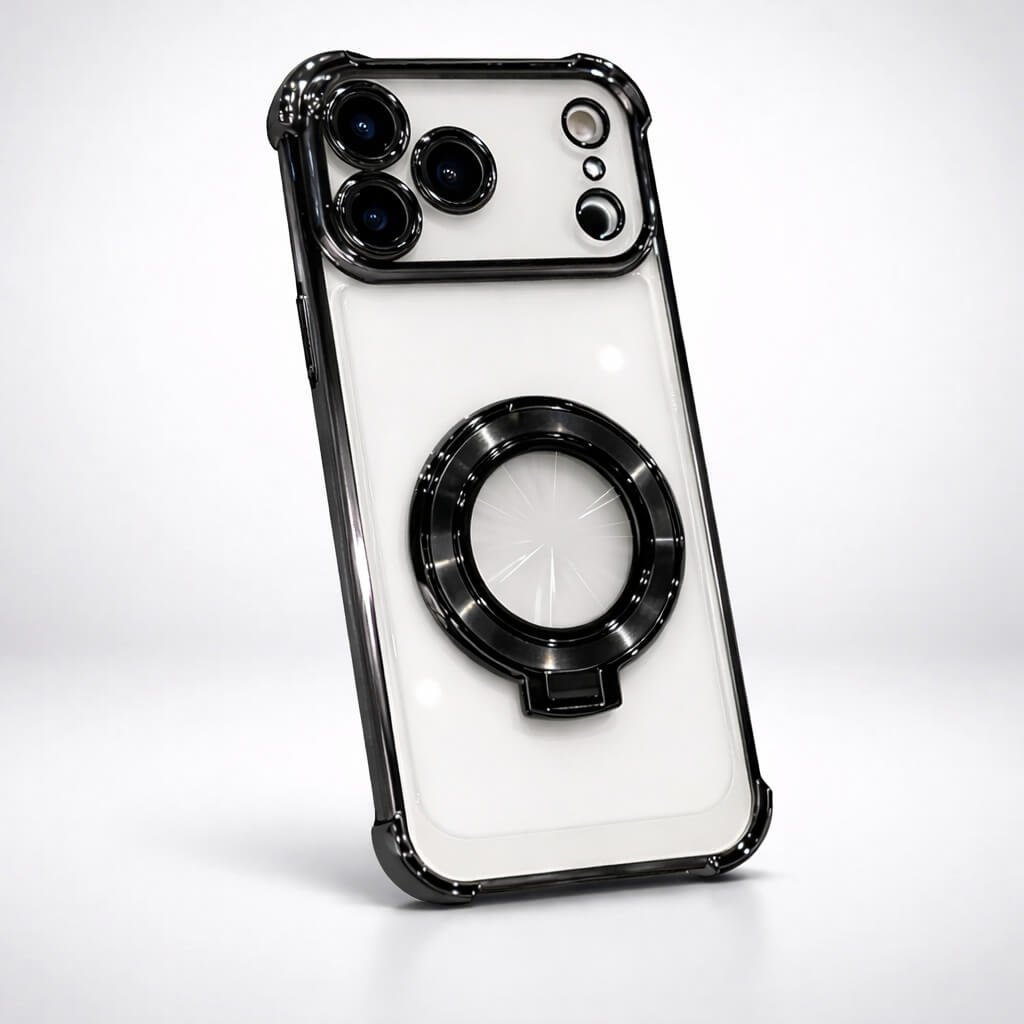
A precisely fitted hybrid case with shock-absorbing material, grip texture, defined protective geometry, and clean magnetic alignment represents a rational baseline configuration.
Final Take
Modern smartphone construction prioritizes structural rigidity, signal clarity, thermal management, and component precision. Impact absorption is no longer the primary internal design priority, which shifts responsibility to the external layer.
Protection is not about fear of cracks. It is about controlling how force enters the system. When selection focuses on fit tolerance, material response under load, and functional compatibility rather than branding or bulk, the case becomes part of the engineering equation rather than an accessory.
FAQ
Yes. Protection is a risk management decision rather than a universal rule. Users who operate primarily in controlled indoor environments, upgrade devices annually, or are comfortable absorbing repair costs may reasonably choose to go without a case. The tradeoff is increased exposure to impact-related damage in exchange for reduced bulk and direct device feel.
Yes, but usually only if the case is poorly engineered. If it traps heat around the frame during sustained workloads, temperatures can rise and throttling may occur. Battery drain is typically indirect. If a case interferes with antenna performance or heat dissipation, the device may increase modem output or reduce efficiency under load.
Phone cases degrade over time. Materials such as TPU and silicone gradually lose elasticity and absorb less impact energy. For most users, replacing a worn case every 12 to 18 months maintains reliable protection, especially if the material shows signs of hardening, cracking, or permanent deformation.
Not necessarily. Protection depends more on material structure, fit tolerance, and impact geometry than on price. Some premium cases justify their cost through tighter tolerances or better engineering. Others are expensive for aesthetic reasons. Construction quality matters more than branding.
Lens protectors add surface-level scratch resistance but do not improve structural impact protection. If your case already provides adequate camera lip clearance, an additional lens cover may offer little benefit and can sometimes affect optical clarity. The decision depends on how exposed the lens area is during daily use.
ceq
Greetings! I know this is somewhat off topic
but I was wondering which blog platform are you using for this site?
I would be fantastic if you could point me in the direction of a good platform
frolep rotrem
I really appreciate your work, Great post.
Pantip
This post presents clear idea for the new people of blogging,
that truly how to do blogging.